Friday, October 21, 2022

A Reel Review: BLACK ADAM


The films based on the super-characters of DC Comics are now operating on three different lines of continuity. There is the universe THE BATMAN (2022), occupies, the universe JOKER (2019), laughs in, and the universe that launched in 2013 with MAN OF STEEL. The latter line has had its share of hits and misses, ranging from critical flops, bombs, divisiveness, internal strife, and re-do’s, all resulting in the longest train wreck in cinema. This year, DC pins all their hopes on a little-known hero known as BLACK ADAM. 


In the occupied city of Kahndaq, archeologist Adrianna (Sarah Shahi), and her son Amon (Bodhi Sabongul), search for a mystical crown they believe will help liberate their people. They wind up awakening Teth-Adam (Dwayne Johnson), a superhero who has been asleep for thousands of years. Adam’s awakening draws the attention of the Justice Society, which includes Dr. Fate (Pierce Brosnan), Hawkman (Aldis Hodge), Cyclone (Quintessa Swindell), and Atom Smasher (Noah Centineo). 


Directed by Jaume Collet-Serra (who guided Johnson on JUNGLE CRUISE), BLACK ADAM is a superhero origin story that stuffs in a ton of story and characters. Oddly enough, the plot is very thin, but is overburdened with one thing or another. There’s business with the military-occupied city, the magic crown, a mystical element that provides great power, powers of the gods, and the underworld rising up with their walking dead to take over the world. It’s a messy web of things to remember, and it is never streamlined enough to make sense. 


Things get even more messy with the presence of the stupid Justice Society. This foursome is already present in this universe, and we are thrown into their existence quickly and bluntly with zero explanation; it feels like we missed four movies of backstory with these characters that were never made. The film asks us to root for them and have emotion when they fight and fall, but it just isn’t there. They seem to be in the film just to give Adam something to fight (which he does, over and over with repetitive plot beats), and to teach him how to be a hero…which is something that nearly any one of the many characters could have done. The Society could easily be cut out of the film and would not change a thing. 


BLACK ADAM is presented by way of endless CGI; there probably isn’t a single shot in the film that doesn’t have a computer-generated effect or enhancement. Most of it looks phony. There’s also a lot of placement of actors’ heads on CGI bodies which just looks bizarre. Action sequences are done on a large scale, and the film does beg to be seen on the biggest screen possible. The battles are over-edited with way too many cuts, and most of it just comes off as noise. BLACK ADAM has a few good laughs and moments, but not many of them. 


Acting is okay. Dwayne Johnson puts away his usual charm and plays the part like a statue; stone-cold with zero emotion. Pierce Brosnan is as elegant as ever but it’s hard to believe he understands the endless universe-hopping jargon he has to plow through. Aldis Hodge plays the part of Hawkman (who looks awesome, at least), as an overzealous Dudley-do-right and just comes off as annoying. 


The finale of BLACK ADAM is a noisy affair with the underworld and its leader unleashing the walking dead (which seem powerless, as even kids are able to kill them with clubs), capped off with a very cool end-credit cameo (best part of the movie). Overall, BLACK ADAM is super-flawed film with too much crammed in. Long-time readers of DC Comic books may appreciate it more, but no one should be required to do homework before any movie. This is a noisy, bewildering mess, just like any endless trainwreck. 


BOTTOM LINE: Fuck it 


Wednesday, October 19, 2022

A Reel Review: HALLOWEEN ENDS


The HALLOWEEN franchise, which started way back in 1978, has a long and convoluted history, with several reboots, remakes, and broken lines of continuity. In 2018, director David Gordon Green’s HALLOWEEN ignored all sequels and only followed-up the initial 1978 film, with a promised final showdown between horror icons Laurie Strode and the hulking, kitchen-knife wielding Michael Myers. That final showdown was punted down the road for the shitty HALLOWEEN KILLS (2021), and now it’s off into 2022 for HALLOWEEN ENDS. 

Four years have passed since the events of HALLOWEEN KILLS, and the masked Michael Myers has vanished. Laurie (Jamie Lee Curtis), has settled in normal domestic living with her granddaughter Allyson (Andi Matichak). Allyson falls for Corey (Rohan Campbell), a tortured young man once accused of murder who stumbles upon Michael’s hiding place and becomes his virtual pupil…

Directed by David Gordon Green and penned by four writers (including Danny McBride), ENDS is a film that is less concerned with Michael Myers or Laurie and more with the environment. Over the years, the once quiet town of Haddonfield has become a haven for mean jerks, bullies, crooked doctors, shock jocks, and drunk assholes who stalk women at every turn. All of this pushes Corey to his breaking point, and when he finds Michael, he becomes his avatar and starts doing his own revenge killing. It’s odd and bold, and gives ENDS such an identity that it barely feels like a HALLOWEEN film. Aside from the ending, the story in ENDS feels like it may have been better off as the middle chapter. 

Credit to the director and his writers for breaking the old HALLOWEEN mold, but it results in is an unfun and unscary movie. Michael and his knife and mask don’t appear until after an hour has passed, and the time prior to that is just dull. The film has very little scares for a horror movie (a serious problem), and characters just do things for the sake of moving the overcomplicated plot forward. Characters as a whole are all over the place. When we see Laurie in the first film of this trilogy, she is living in a fortress while Michael is locked away. Here, she is living in a picture-perfect gingerbread house while Michael is on the loose. No sense. Allyson’s romance with Corey comes out of nowhere, and Michael can’t decide if he's a wounded old man or invincible. It’s a complete mess. 

ENDS looks great, has a small amount of gore, and the score is excellent. Tension just isn’t there aside from a very good opening sequence, and the film has just the right amount of nostalgic throwbacks. 

The best part of the film is the acting, as the entire cast is excellent.  Jamie Lee Curtis is tough while grieving, and Andi Matichak matches her well. The real star here is Rohan Campbell, who really stretches his acting muscles. 

After two and half movies, we finally get that big final showdown between Laurie and Michael, and although the location for the big last fight is proper (a kitchen. Ha. Ha.) the battle is too quick, shot in the dark, and sloppily edited…and is not worth the long wait of 40-plus years. When it does end, there is no doubt that this is indeed the wrap for this particular line of continuity, and there isn’t a sense of satisfaction as much as a relief. 

BOTTOM LINE: Fuck it


Monday, October 10, 2022

A Reel Review: AMSTERDAM


As Reel Speak stated in his review of Andrew Dominik’s BLONDE (HERE), one of Hollywood’s new favorite toys is the Fairy Tale, where a real-life event or character from history is given an alternate story or ending. Quentin Tarantino did it with great success, Andrew Dominik did it to a lesser success, and up next on deck is celebrated writer and director David O’ Russell and AMSTERDAM; his first film in seven years. 


In 1918, WWI veterans and best buddies Dr. Burt (Christian Bale), and Harold (John David Washington), enlist the help of their old friend and Army nurse Valerie (Margot Robbie), to help clear their names when they are accused of murdering the daughter (Taylor Swift), of their former commanding officer. As they race to find the truth, they stumble upon a darker and larger plot…


Written and directed by David O’Russell, AMSTERDAM is an alternate take on the Business Plot: a 1933 political conspiracy to overthrow the sitting President…which may or may not have been a farce. AMSTERDAM isn’t too concerned with following the history books, as the plot itself is moved up nearly 20 years, but is instead focused on dancing around it as the characters stumble and bumble around trying to clear their names.


If one word could be used to describe the film, it would be chaos. AMSTERDAM races around from location to location, often using extended flashbacks, unraveling the plot and the mess the characters are in layer by layer. Its frantic style makes it difficult to latch onto anything, and tends to get so discombobulated that it is ultimately exhausting.


AMSTERDAM however still has a lot to enjoy, with a gorgeous looking movie, stunning 1918 environments, and very good humor. But despite its frantic pacing, it oddly feels every bit of its 134 minutes. 


The entire ensemble cast is excellent. Christian Bale is hilarious, and his look and stature (he’s a wounded vet with a crooked back), just eats up the screen. John David Washington and Margot Robbie have great chemistry together, and Taylor Swift is a huge surprise. The rest of the cast is also great; Chris Rock, Anya Taylor-Joy, Zoe Saldana, Mike Meyers, Michael Shannon, Timothy Olyphant, Rami Malek, and Robert DeNiro. 


After going all over the map, AMSTERDAM eventually gets into the deep plan to overthrow the U.S. Government, but by that time the audience would be too beat up to really care. There’s a good story at hand here, and quite relevant in today’s times, it’s just too bad that it took such a messy route to get there. 


BOTTOM LINE: Rent it 


Wednesday, October 5, 2022

A Reel Preview: The Year in Film 2022 - Episode X


October is arriving in a big way, offering new horror films, a host of Oscar hopefuls, and a long-delayed superhero debut. Here are the notable theatrical releases for the month: 


AMSTERDAM – Oscar-nominated director David O’Russell (THE FIGHTER, SILVER LININGS PLAYBOOK), returns with his first film in seven years…a fictionalized account of a 1933 political conspiracy. The packed cast includes Christian Bale, Margot Robbie, John David Washington, Chris Rock, Anya Taylor-Joy, Zoe Saldana, Mike Meyers, Michael Shannon, Timothy Olyphant, Taylor Swift, Rami Malek, and Robert DeNiro. 


TAR – Cate Blanchett plays one of the greatest living composers in this drama. It is directed by Oscar-nominated director Todd Fields (IN THE BEDROOM). 


HALLOWEEN ENDS – The merciful end of the HALLOWEEN franchise in this semi-reboot-sequel trilogy. Jamie Lee Curtis reprises her role as Laurie Strode, facing off against Michael Myers once again. David Gordon Green, who helmed the first two films in this H40 Trilogy, returns to direct. 


THE GOOD NURSE – In this hospital drama, a series of mysterious patient deaths points the finger at two nurses (Jessica Chastain, Eddie Redmayne). 


BLACK ADAM – Dwayne Johnson squeezes into the outfit of DC superhero/villain Black Adam, in this adaptation that has been in and out of production for 20 years. Pierce Brosnan co-stars. 


MY POLICEMAN – Pop-star Harry Styles takes on a lead role about a gay policeman in the 1950’s. 


TICKET TO PARADISE – In this romantic comedy, two divorced parents (George Clooney, Julia Roberts), travel Indonesia after learning their daughter is planning to marry a man she just met. It is directed by Ol Parker, who brought us MAMMA MIA! HERE WE GO AGAIN in 2018. 


THE BANSHEES OF INISHERIN – Oscar nominated director Martin McDonagh (THREE BILLBOARDS OUTSIDE EBBING, MISSOURI), brings us this drama in the Irish countryside about two friends (Colin Farrell, Brendan Gleeson), who fall into conflict. Kerry Condon and Barry Keoghan co-star. 


PREY FOR THE DEVIL – In this horror flick, a young nun (Jacqueline Byers), learns the skill of exorcisms and battles for the soul of a young girl. 


TILL – A biographical film about Mamie Till, an activist who pursued justice after the death of her 14-year-old son, who was lynched after whistling at a white woman in 1955 Mississippi. 


*


Next month, Reel Speak previews the month of November. 


Monday, October 3, 2022

A Reel Review: BLONDE


When Quentin Tarantino graced us with his magnificent ONCE UPON A TIME IN HOLLYWOOD in 2019, he unknowingly may have started a new genre in film: The Hollywood Fairy Tale…where real-life people and happenings are given alternate stories. Tarantino gave his players a bold, yet satisfying and happy ending. Here in 2022, director Andrew Dominik takes the same approach, but sticks with tragedy in his Marilyn Monroe biopic, BLONDE. 


Directed by Andrew Dominik and based on the 2000 novel of the same name by Joyce Carol Oates, BLONDE is a semi-fictionalized take on the famed actress. The film takes us through Marilyn Monroe’s rough childhood and her skyrocketing career in film, as she goes through husbands (Adrien Brody, Bobby Cannavale), lovers (Xavier Samuel, Evan Williams), and sex abuse at the hands of studio producers and even Presidents. The film sticks closely to her childhood experiences with her abusive and mentally disturbed mother (Julianne Nicholson), and semi-absentee father…using those old memories as a catalyst for her ongoing miserable life as an international movie star. Dominik strips away much of the glam of Hollywood and presents it as a dangerous place for women at the time, making a statement on what happened then and perhaps what continues to still happen behind closed doors today. 


BLONDE pulls no punches in presenting a grim Hollywood, and both Dominik and his star Ana de Arms deserve much credit making such an uncompromising film. Nudity is plenty, the scenarios uncomfortable, and Dominik’s take on abortion is made clear through a heavy-handed or even grotesque manner. This could all be called exploitative, but if the film had shyed away from the assaults to Marilyn’s body and mind, it would have come off as a sanitized film and just another addition to a long list of endless biopics. 


Dominik puts together a gorgeous film with breathtaking cinematography. It often looks like it should be playing in 1950’s theatres, and archival photographs of Marilyn are recreated in stunning detail. Scenes are shot artfully and abstractly, and the changing of aspect ratios and switching from black-and-white to color helps to mark the time periods. The score by Nick Cave and Warren Ellis is excellent. 


Also excellent is the acting. Ana de Arms vanishes into Marilyn in look and sound, and she plays a woman who is constantly teetering on the edge of breaking down so convincingly that we should perhaps wonder about her health. The rest of the cast is also great; Adrien Brody, Bobby Cannavale, and Julianne Nicholson. Young Lily Fisher, who plays a young Norma Jean, is a revelation. 


There’s a lot to debate about BLONDE in just how true it is to history, but as the character actually says in the film, “my life is a fairy tale”, and the film should be viewed as such…and there should be no surprises that it ends tragically. At 166 minutes with a deliberate pace, BLONDE feels like it goes for an eternity, and despite its graphic scenes here and there, is actually a soft NC-17. It’s take on Marilyn may not be what generalized audiences want to see, but perhaps that’s the point Dominik is looking to make: The audience reaction shows how little has actually changed. Maybe that’s brilliant, maybe it’s a little gross…but its fairy tale cinema at its most bold. 


BOTTOM LINE: See it 


Tuesday, September 27, 2022

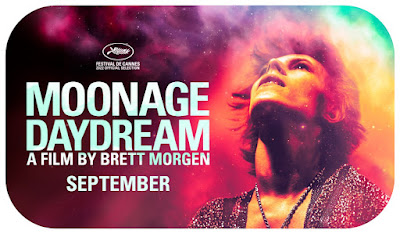
A Reel Review: MOONAGE DAYDREAM


As the first documentary to be officially authorized by the estate of the late great David Bowie, the pressure was on director Brett Morgen to get things right. After all, music docs have a tendency to veer into hero worship, with either narration or old buddies recounting war stories. In MOONAGE DAYDREAM, Bowie gets to speak for himself. 


A trippy documentary that uses previously unreleased footage from Bowie’s personal archives, MOONAGE DAYDREAM is an untraditional experience. Lacking any sort of structure, shape, or standard documentary tropes of third-party interviews or narration, the film values art over information; using images, music, and clever editing that doesn’t want to analyze Bowie as much as it wants to shine a light on him. Assembled with archival interviews of Bowie, his own home videos, and live concert footage, DAYDREAM unfolds just like a dream…without any sort of shape and just a loose revisit of his life starting with the Ziggy Stardust era. 


The experience of DAYDREAM, and it is certainly meant to be an experience more than a learning session, can be frustrating to those looking for, or used to the traditional film narrative. Director Brett Morgan goes all over the map in filling the run time of 140 minutes; using animation and old stock B-movies in seemingly random places. Morgen repeats shots here and there, and it can make for a bewildering viewing. The highlights of the film are the in-concert performances which truly do illuminate the man, and the archival interviews which have been lost in time and are very revealing. 


For the most part MOONAGE DAYDREAM works. Bowie was never an artist who could be considered traditional or in any sort of box, so a film about his life should rightly be the same. Despite the shaplessness of the film, Morgen does discover a common thread; that Bowie was a man who was in constant need of expressing himself. Finding that thread was a herculean task in the assumed thousands of hours of footage Morgen had to have gone through. The film also has a focus on Bowie’s changing as he gets older, but sadly ends before we get into his later years. 


Long-time fans of Bowie will eat this film up, and will probably pick up on references or Easter Eggs that casual listeners would miss in all of the random visuals. It is aptly titled, as it unfolds like a dream; not making sense but still getting the message across. This is a film for Bowie lovers only, and that limitation keeps it from hitting star-status. 


BOTTOM LINE: Rent it


Friday, September 23, 2022

A Reel Review: DON'T WORRY DARLING


So far, actress-turned-director Olivia Wilde’s second film, DON’T WORRY DARLING, has been gaining a lot of attention for all the wrong reasons. Negative media coverage, click-bait headlines, and a lot of he-said, she-said has been going on stemming from the film’s troubled production and feuding cast members. Now that the film is in theatres, it’s finally time to judge it on its own merits. 


Alice (Florence Pugh), and her husband Jack (Harry Styles), are enjoying their lives in their perfect, 1950’s neighborhood named Victory; a town designed by Harry’s employer Frank (Chris Pine). After the death of one of their neighbors, Alice begins to suspect that something is wrong in their picture-perfect lives…


Directed by Wilde and written by Katie Silberman, who penned Wilde’s successful feature debut BOOKSMART (2019), DON’T WORRY DARLING is a picturesque mystery that looks like it has fallen out of the magazine pages of old. Alice and Jack are having the time of their lives, having cocktail and pool parties nearly every day and night and unable to keep their hands off each other. It doesn’t take long for things to seem a little off, as things just seem too perfect even for the 1950’s. The men happily leave for their jobs in the morning, leaving the wives at home to cook and clean, and eventually greet their husbands back at the door with a roast in the oven and a cocktail in their hand whilst wearing an accessible skirt. 


Once Alice begins to suspect something is wrong and questions her husband’s secretive job, she is quickly put in her place by her friends and neighbors. Wilde and Silberman are playing with themes of what most men would prefer out of their wives; stay in your lane, feed me, stay out of my world. These are delicate themes to explore but the film works them with a sledgehammer. The points are heavy-handed and the audience can suspect something is wrong with Victory long before Alice does. This is a sin, as a film should never let the audience get ahead. 


Wilde shows good chops behind the camera. The film looks gorgeous, and the scenes of tension and conflict build up nicely. As Alice gets deeper into her doubting of her reality, DON’T WORRY DARLING gets into weird territory with random images and odd, out-of-body happenings…with not all of them explained by movie’s end (more on that in a bit). The music by John Powell is outstanding, and the sound effects/mixing done is unnerving and very well done. 


Acting is great for the most part. Florence Pugh puts on a display and once again stakes her claim as one of the best actresses working today. Chris Pine is a little one-note but fine. Harry Styles is passable, but shows his inexperience when having to face-off against Pugh, and a scene where he is asked to cry is downright awful. Wilde herself appears as Alice’s best friend and is very good, and Gemma Chan comes in as Frank’s wife and pulls a few surprises. 


DON’T WORRY DARLING is a mystery; the answer to what Victory really is, is what Alice needs to find out. The big reveal is two-fold, with the first so-called twist a little obvious to anyone who has ever seen a movie before. It still would have worked fine but then the film takes that reveal an extra step, and it’s an extra step that ruins it all. The big final solution doesn’t survive under scrutiny, and reveals a lot of plot holes and several untied threads that were dangling in front of us through the whole movie. It’s a frustrating and unsatisfying ending, and it’s time for DON’T WORRY DARLING to get attention for its share of merits (there are many), and demerits (just as many). 


BOTTOM LINE: Rent it 


Saturday, September 17, 2022

A Reel Review: THE WOMAN KING


When it comes to historical war pictures, the most common complaint in the modern era is “they don’t make them like they used to”. It’s a fair gripe, as the days of thousands of extras charging each other in a real, outdoor location seems to have been replaced with artificial soldiers and environments. But not so for THE WOMAN KING. 


Set in the West African kingdom of Dahomey in the 1820’s, General Nanisca (Viola Davis), commands and trains a legion of female warriors, defending against enemies from their own country and from other shores…


Directed by Gina Prince-Bythewood and based on the history of the Agojie, THE WOMAN KING is a slice of overlooked history intertwined with personal drama. Nanisca and her captains (Lashana Lynch, Sheila Atim), are loyally serving their king (John Boyega), who has long condoned but is now looking to end the slave trade with other countries. This progressive move upsets a rival kingdom who has long profited from selling their own people into slavery. Meanwhile, a young recruit named Nawi (Thuso Mbedu), enters the Agojie army and learns things the hard way. 


THE WOMAN KING smartly, and skillfully navigates the many happenings. The war story and themes of human rights along with the personal stories of Nanisca and Nawi weave together nicely, and a mid-movie twist turns everything on its head. There are very little cliches or standard templates to be followed, as the film starts off with Nanisca and her army already in their glory…thankfully avoiding any origin tales. 


Filmed on location in South Africa, the film looks gorgeous, and there is a commitment to actual swordfighting and practical effects; if there is any CGI here, it’s barely noticeable. The film clocks in at 135 minutes but doesn’t feel its length thanks to some snappy pacing and smart editing. The gore is there, but isn’t overdone, and locations such as the African plains or the palaces are stunning. Terence Blanchard’s score is excellent. 


Also excellent is the acting. Viola Davis, at 57 years young, takes on the burden of physicality as if she was born into it, and her emotional moments are done so well we can look at this long-gifted actress in a new light. Lashana Lynch and Sheila Atim are also excellent, and John Boyega shines as the young king. The show is stolen by young Thuso Mbedu, who holds her own against the veteran cast, and has a gut-wrenching scene when she weeps and wails over a fallen warrior. 


THE WOMAN KING will undoubtedly earn comparisons to the many other sword-driven epics of the past, but thanks to its unique story and relevance in today’s age, truly stands on its own. It’s one of those films that’s meant to make our fighting spirits soar, and that’s how they should always make them. 


BOTTOM LINE: See it 


Wednesday, September 14, 2022

A Reel Opinion: The Top 10 Best Cinematic Weapons


Last week, Reel Speak celebrated the 30th anniversary of Michael Mann’s THE LAST OF THE MOHICANS (read that HERE). That film, set in 1757, makes use of weaponry such as long-rifles, swords, tomahawks, and one hell of an axe-club that one of the heroes uses to dispatch the villain. That deadly cinematic prop got this Blogger thinking about the Best Cinematic Weapons. Specifically: handheld weapons that take skill to wield. 


Ever since the dawn of cinema, weapons have had a central role in settling conflicts and driving plots. Early Westerns made icons out of rifles and revolvers held by Broncho Billy Anderson and John Wayne, and swashbuckling stars such as Errol Flynn made careers out of the sword. In the 1970’s, guns seemed to be everywhere: from THE GODFATHER films, to DIRTY HARRY, to SCARFACE, to TAXI DRIVER. In the 1980’s, there was a return to sword-love with CONAN THE BARBARIAN and blades with cool names like Excalibur, and combat vet John Rambo made a certain hunting-knife a household name. The Eighties also saw a lot of gun-love with the RAMBO and LETHAL WEAPON franchises. The best cinematic weapons are the ones that are recognizable after decades, and have such a screen-presence that they’re practically a character in the film. 


Blogger’s note: Some of these weapons have several versions, so their first screen appearance will be cited. And again, this is all about hand-weapons…so no Death Stars here. 


Now, let’s settle some conflict…


10. The Bride’s Hattori Hanzo Sword

From: KILL BILL VOL. 1 (2003), and KILL BILL VOL. 2 (2004)


Quentin Tarantino’s bloody affair of revenge could not have worked without our heroine, played by Uma Thurman, in ownership of the right tool for the right job. Her magnificent, elegant, yet deadly sword was strong enough to cut through other swords, along with the heads, scalps, arms, and legs of her enemies. Thanks to an excellent sequence showing the origin of the sword, it becomes a literal, vital companion to The Bride.  


9. Proton Pack

From: GHOSTBUSTERS (1984)


Sci-fi films have had more than their share of futuristic guns, with iconic boom-makers from ROBOCOP (1987), BLADE RUNNER (1982), and eleven STAR WARS films deserving mention. GHOSTBUSTERS turned the tables of how we perceive most guns, stepping away from linear shooting and getting into wavy, cool-looking streams. Fun, iconic, and timeless. It's not really a weapon by design as its primary function is to contain ghosts and not obliterate them...unless of course, we cross those streams. 


8. Ol’ Painless

From: PREDATOR (1987)


The alien killer from space has some cool weapons, ranging from retractable blades to laser guns, and the platoon of commandos it goes up against is also well-equipped with U.S. Army guns and blades. Jesse Ventura’s character had the fun of lugging through the jungle a big gun typically found mounted on the bottom of choppers, and even more fun firing the damn thing. Ol’ Painless mowed down enemies and half the jungle, and the sound it made, like a machine from hell, was unforgettable. 


7. Pulse Rifle 

From: ALIENS (1986)


Speaking of unforgettable sounds, James Cameron made sure to outfit his platoon of space Marines with kickass weapons, with the primary standard-issue gun making one of the coolest sounds. The rifle was doubled-up with a grenade launcher, and had a unique look which combined science fiction with real-world mechanics. 


6. William Wallace’s Sword

From: BRAVEHEART (1995)


Just like owners looking like their pets, there are many instances in film where a character is perfectly matched with their weapon, and Mel Gibson’s take on Scottish freedom fighter William Wallace is a perfect example. Wallace is shown as a larger-than-life character, so he deservingly has a sword that is larger than most men. It has become instantly recognizable over the years, and its inclusion in the lonely yet defiant final shot of the film speaks volumes. 


5. Captain America’s Shield

From: CAPTAIN AMERICA: THE FIRST AVENGER (2011)


This is a bit of a cheat, as Captain America’s shield was an American symbol long before the Marvel Cinematic Universe put it in the hands of Chris Evans. The shield made two quick cameos in IRON MAN (2008), and IRON MAN 2 (2010) before finally seeing action in Cap’s first solo outing, and once it started flying around mowing down Hydra soldiers, there was no doubt a new icon in cinema had been born. What makes it even more special is that it can protect just as well as it can attack, which is exactly what Captain America does best. Of all the weapons on this list, this is the one that stands for many different things. 


4. Freddy Krueger’s Knives

From: A NIGHTMARE ON ELM STREET (1984)


Horror has had a collection of weapons like machetes, chainsaws, hooks, kitchen knives, and axes. Where most horror goons walk around with everyday items, the most original weapon came with the most original character of Freddy Krueger and his knived glove. Freddy hacks and slashes us in our dreams and the real world, and who could forget the sickening sound of those four knives being scraped on metal. The stuff nightmares are made out of. 


3. James Bond’s Walther PPK

From: DR. NO (1962)


Similar to the horror genre, the villains of James Bond have had their memorable weapons, such as razor-brimmed hats, metal jaws, and golden guns. The one weapon in the five decades of 007 films that everyone remembers is the one carried by the man himself. A small, yet deadly gun…it is a gentleman’s weapon, and over the years has earned its status as a film icon along with Bond’s car and catchphrases. 


2. Indy’s Whip 

From: RAIDERS OF THE LOST ARK (1981)


One of the best and earliest surprises in RAIDERS OF THE LOST ARK is when our famous archeologist and obtainer of rare antiquities fends off an ambush using a bullwhip. Where most heroes would pull out their pistol and blast away, Indiana Jones had a style of his own. The whip became an extension of the character, who used whatever was around him to fight, survive, and solve problems. Indy’s whip was a weapon but also a tool, and that great whoosh-snap sound will always be associated with the character. 


1. Your Father's Lightsaber

From: STAR WARS (1977)


When STAR WARS debuted in 1977, it stole our breath in many ways. But it was the moment Luke Skywalker ignited his father’s lightsaber where everything changed. At that point in the film, we all wanted to shoot a laser gun, but after Luke ignites and waves around his new laser-sword, every kid ran home looking for a broomstick or cardboard tube to fight with. The look, sound, and eventual usage in a duel was mesmerizing, and still is today. Over the years there have been many variations in design, blades, and colors (providing something for everyone), but this is the one that started it all, and changed the way we look at cinematic weapons forever. 


REEL SPEAK'S TOP 10 BEST CINEMATIC WEAPONS


  1. Your Father's Lightsaber
  2. Indy's Whip
  3. James Bond's Walther PPK
  4. Freddy Krueger's Knives
  5. Captain America's Shield
  6. William Wallace's Sword
  7. Pulse Rifle
  8. Ol' Painless
  9. Proton Pack 
  10. The Bride's Hattori Hanzo Sword


Wednesday, September 7, 2022

A Reel 30: THE LAST OF THE MOHICANS


“You stay alive!”


This month marks the 30th anniversary of Michael Mann’s THE LAST OF THE MOHICANS. 


Based on the 1826 novel by James Fenimore Cooper and the 1936 film adaptation, THE LAST OF THE MOHICANS detailed the 1757 adventures of the daughters of a British general and their native American companions during the hostilities of the French-Indian War. 


Serving as a drama, love story, and a slice of early American history, the production took great care in recreating accurate costumes and props, ranging from the long-rifles to the tomahawks. Although the story took place in upstate colonial New York, filming mostly took place in the Blue Ridge Mountains of North Carolina. 


The directing reins were handed to Michael Mann, who was steering his first film since the crime drama MANHUNTER in 1986. The script was written by Christopher Crowe. The cast was led by Daniel Day-Lewis, who was fresh off his first Oscar win for MY LEFT FOOT (1989).  Lewis, playing the pivotal role of Hawkeye, went into deep character research by doing rigorous weight training, and learned to live off the land by hunting and skinning animals, along with carving canoes, and carried his long-rifle with him at all times. The rest of the cast would include Madeline Stowe, Russell Means, Eric Schweig, and Steven Waddington. The score was provided by Trevor Jones and Randy Edelman, with the main theme taken from The Gael by Scottish songwriter Dougie MacLean. 


THE LAST OF THE MOHICANS opened at No. 1 at the box office in September of 1992 while receiving critical acclaim, and would win an Oscar for Best Sound. 


*


Six years after THE LAST OF THE MOHICANS, Michael Mann would direct his crime-thriller HEAT (1995), which most cinephiles consider to be Mann’s best film. But for this Blogger, that top-ranking will always belong to MOHICANS. Beautifully shot, acted, scored, and directed…MOHICANS captures an overlooked part of American history while bringing the drama, action, emotion, and memorable scenes that have lingered in our memories to this day; from Hawkeye’s powerful monologue behind a waterfall, to the heart-pounding climactic chase up a mountain. It is an exploration of the vanished frontier while also considering all that America would lose while gaining territory. A perfect American film. 


“And one day there will be no frontier…”