Wednesday, July 8, 2020

A Reel Retro Review: SCENT OF MYSTERY (1960)

With no new films to review for the foreseeable future, Reel Speak will randomly review a classic film from the TCM library every week. Not just for the sake of filling time, but to hopefully introduce some classic, overlooked, and perhaps forgotten screen gems to those of us who may be unfamiliar or unawares of their existence.  

In the early part of this century, studios tried to create a new sensation with 3D films; either by re-releasing old classics in the format or making movies tailored to show off the effect. It was a gimmick that died quickly (thank the Maker), leaving many of the movies of that era languishing without that extra dimension. In the 1960’s, a similar gimmick was tried, called Smell-O-Vision…which was a system that released odor during the film so that audiences could smell what was happening in the movie. The first film to give it a try was SCENT OF MYSTERY in 1960. When viewing this film at home, the Smell-O-Vision is obviously not a factor, so the question is, how does the film work without the tricks? 


While on holiday in Spain, Oliver Larker (Denholm Elliott), is a mystery novelist who stumbles upon a plot to murder an American heiress. He enlists the help of a cabbie, Smiley (Peter Lorre), to locate the woman and save her life. 

Directed by Jack Cardiff from a screenplay by Gerald Kersh, SCENT OF MYSTERY begins with a simple enough plot; find the girl, save her life, catch the bad guys. Larker and his cabbie have very little to go on in the early goings as they only catch a glimpse of her  from afar. What comes next is a cross-country trip across Spain which serves as one-part mystery-solver and one-part tour guide. 

What should be a simple plot eventually gets unnecessarily complicated. The film moves into a mistaken-identity genre when Larker and Smiley spend half the film chasing a woman who isn’t really the heiress, and cross paths with a mysterious lawyer and sniper-assassin whose actions never make much sense. The reasons behind the need to kill the heiress are revealed in a convoluted mess, and even by the time the credits roll one would still be scratching their nose trying to make sense of it all. 

Scenes where the Smell-O-Vision would have kicked in are obvious; the presence of the sniper was hinted at by the smell of tobacco, a brawl in a bedroom spills perfume, and a cart full of wine barrels smashes and spills wine everywhere. The film seems to rely on the gimmick, as the rest of its execution is quite clumsy. Larker’s status as a mystery novelist never comes into play (he could have been a plumber), and even though he is established as a British gentleman who spends most of his days behind a typewriter, he suddenly switches to action-hero capable of fist fighting his way out of a jam or two. The jokes and gags are lame even for 1960 standards, with most of them coming from awkward, voice-over one-liners from Larker. 

Denholm Elliott carries the film and is in nearly every frame. He gives it his best, and at the very least gives the film a status as a curiosity piece for anyone who would like to see the work he did before he became the sidekick to Indiana Jones in the 1980’s. Peter Lorre as Smiley the cabbie is a hoot, and Beverly Bentley, as the mistaken-identity heiress, is also very good. 

The closing of the film features an un-credited cameo by Elizabeth Taylor as the real heiress, giving the film one of the few attempted twists that actually works. Every other surprise is hard to make sense of, and it’s clear that this is one of those films that relied too much on things outside of its own script and direction to succeed. SCENT OF MYSTERY kinda stinks. 

BOTTOM LINE: Fuck it 

*
Reel Facts: SCENT OF MYSTERY opened in three theatres in 1960 in New York, Los Angeles, and Chicago. The Smell-O-Vision mechanism did not work well, and although the problems were eventually ironed-out, the film suffered from poor reviews and bad word-of-mouth and finished as a financial failure. Director Jack Cardiff was a cinematographer at heart, having been nominated by the Academy for Best Cinematography five times, winning in 1947 for BLACK NARCISSUS. 


Monday, July 6, 2020

Ennio Morricone: 1928 - 2020


Oscar-winning film composer Ennio Morricone has passed away at 91.

A composer, orchestrator, and conductor who composed over 400 scores for film and television in a career that spanned over 70 years…Ennio Morricone was born in Rome in 1928. His first music teacher was his father Mario, who taught him how to read music and play several different instruments. He entered the National Academy of St. Cecilia to take trumpet lessons before the age of 12. He studied the trumpet, composition, and choral music and completed a four-year program in just six months. 

After graduating in 1954, he started to write and arrange music for films as a ghost writer for well-known composers. His earliest scores credited to him were Italian comedy and costume films.  In 1964, his career took off when he was hired by former classmate Sergio Leone, and together they created a unique score for Leone’s “Spaghetti Western”,  A FISTFULL OF DOLLARS…starring Clint Eastwood. Because of budget restraints, Morricone used gunshots, cracking whips, whistles, and electric guitars to create a signature sound that he would be known for. He would compose for Leone’s two follow-ups in his Dollars Trilogy; FOR A FEW DOLLARS MORE (1965), and THE GOOD, THE BAD AND THE UGLY (1966). He would go on to compose for Leone’s ONCE UPON A TIME IN THE WEST (1968), and Leone’s last Western, A FISTFUL OF DYNAMITE (1971). 

Morricone would compose for many films, with notables such as EXORCIST II: THE HERETIC (1977), DAYS OF HEAVEN (1978), THE THING (1982), ONCE UPON A TIME IN AMERICA (1984), THE MISSION (1986), THE UNTOUCHABLES (1987), CINEMA PARADISO (1988), CASUALTIES OF WAR (1989), BUGSY (1991), WOLF (1994), BULWORTH (1998), MALENA (2000), and MISSION TO MARS (2000). 

In 2015 he would win an Oscar for Quentin Tarantino’s Western THE HATEFUL EIGHT. This was after five previous nominations and an Honorary Award in 2007 that recognized his lifetime achievement. In 2005 four of his film scores were nominated by the American Film Institute for an honored place in the AFI’s Top 25 Best American Film Scores of All Time. In 2009 the Recording Academy inducted his score for THE GOOD, THE BAD AND THE UGLY in the Grammy Hall of Fame. Over his career he would win four Grammy’s, four ASCAP Awards, and six BAFTA Awards. 

*

In 1983, the heavy metal group Metallica started running Morricone’s famous track, The Ecstasy of Gold as a prelude to their shows; a tradition that continues to this day. The track’s wonderful build-up sets the mood for their shows perfectly, and anyone who has been to their shows or viewed the live recordings would have to be soul-less to not get the chills. Morricone’s music was non-traditional at first, but its uniqueness became tradition and influenced not only future film composers but other musical acts as well (the Metallica track The Unforgiven was a direct homage). Over the years, his compositions for Sergio Leone’s trilogy of Westerns have earned even more respect, and at this point…his scores for those films have become synomonous with the cowboy and the Old West. Today he rides into the sunset, and we can’t help but to hear the crack of the whip as he does. 


Wednesday, July 1, 2020

A Reel Opinion: The Top 10 Best Films to Watch on the 4th of July


The Independence Day holiday is upon us; a time to celebrate what is widely considered to be the birth of America. This holiday is generally marked by cookouts, fireworks…and cinema. Through moving pictures, sounds, and music…the movies can capture that American spirit in a way that makes us proud of our country, and can bring back to life stories of the past that have forged the foundations of the land of the free. 

These movies can take on many shapes and forms. War pictures are a popular choice, as they tend to capitalize on American resilience against threats to democracy. Prime choices there may include the John Wayne-led THE LONGEST DAY (1962), Steven Spielberg’s tribute to the American solider in SAVING PRIVATE RYAN (1998), Edward Zwick’s Civil War drama GLORY (1989), or the TOP GUN films. Alternate tales of American history are also a popular choice, like FORREST GUMP (1994). Family films are usually the go-to…with plenty of choices from classic Disney or modern Pixar. The best films to watch on the holiday weekend are the ones that the whole family can enjoy, capture the spirit of America, and offer something to learn. And that leads us to Reel Speak’s Top 10 Best Films for the 4th of July. 


So let’s unfurl that flag…


10. AN AMERICAN TAIL (1986)


Animation legend Don Bluth helmed this animated musical adventure about a family of mice making their way to America. The film follows the tail (ha), of Fieval…who is separated from his family and must make his way alone to unfamiliar places. A sweet and innocent introduction to the immigrant story, one of America’s pillars. 


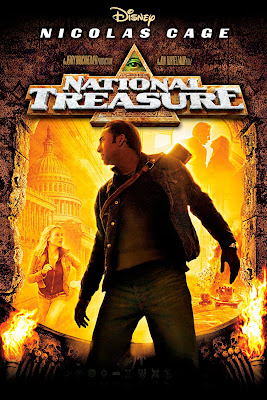
9. NATIONAL TREASURE (2004)


Nic Cage leads the way in this treasure hunt that doesn't have a lot to do with patriotism, but is saturated in American lore. The film is packed with history-book settings and objects: The Declaration of Independence, Benjamin Franklin, Independence Hall...and much more. Not to mention Cage's patriotic character name of Benjamin Franklin Gates. 


8. CAPTAIN AMERICA: THE FIRST AVENGER (2011)


When Captain America made his comic-book debut in 1941, his cover art had the star-spangled man punching out Hitler…a cover that would rally the country together and make Cap an instant American icon. Prior to 2011, the character had appeared on the big and small screen before, but it was Joe Johnston’s pulpy take that would reboot his iconic status. Perfectly played by Chris Evans, THE FIRST AVENGER captures the essence of Steve Rogers, who lived and died through the American ideal. 


7. AMERICAN GRAFFITI (1973)


Before George Lucas created STAR WARS and Indiana Jones, he made this little film which captures the purest form of Americana. This coming-of-age classic, which stars Harrison Ford, Ron Howard, and Richard Dreyfuss…follows a group of teens on their last night of youth before heading off to college and adulthood. Set in pre-Vietnam 1960’s with classic rock n’ roll tracks and American muscle cars, GRAFFITI shows us the country as we wish to remember it, and wish it still was. 


6. YANKEE DOODLE DANDY (1942)


A legend plays a legend here, with James Cagney playing composer George M. Cohan as he takes a trip to the White House to accept a special award; an event that triggers an extended flashback of his life. It’s a combination of patriotism and American history, and just as the title suggests…is packed with red-white-and-blue bravado. But deeper than that, its overall message of resiliency truly captures the spirit of its title.


5. THE PATRIOT (2000)


Mel Gibson plays an American colonist who gets caught up in the Revolutionary War when his family comes under fire. Directed by Roland Emmerich and backed by a wonderful John Williams score, THE PATRIOT may play it loose with history, but it’s beautiful cinematography, thrilling battle scenes, and emotional family drama makes it an entertaining watch. Its brutality may disqualify it as a family film, but it does have educational value. And in superhero-movie terms, this is the origin story of the American patriot. 


4. 1776 (1972)


Before Hamilton, there was 1776…which was also based on a Broadway production. This musical follows the Founding Fathers as they sing and dance their way to the founding of America and the signing of the Declaration of Independence. Educational, entertaining, and a vital slice of U.S. history. Another film that played it loose with history, 1776 still gets the message across in a sweeping spectacle. 


3. A LEAGUE OF THEIR OWN (1992)


There isn’t anything more American than baseball, and there isn’t anything more American than fighting for your rights. The late great Penny Marshall directed this gem, which is a fictionalized account of the real-life professional girls’ baseball league; formed to take the place of the Major Leagues when most their players went off to fight in WWII. The girls have their work cut out for them in proving they belong on the diamond, a fight that any American can relate to, and it also explores a country coming together at home during a time of war.  Tom Hanks and Geena Davis lead the ensemble cast that is as funny as it is emotional. 


2. JAWS (1975)


The original Summer blockbuster that made Steven Spielberg a household name in which a shark terrorizes a beach town. It doesn’t have any flag-waving or catchy patriotic tunes, but its time-setting of a 4th of July weekend has made it a mandatory holiday viewing for more than one generation. But beyond that, it does capture the love we have for beaches and holiday weekends, and the presence of the shark threatens that…which makes the eventual sea-journey to destroy it and recapture our freedom all the more important. 


1. INDEPENDENCE DAY (1996)


What better way to celebrate Independence Day than with a film that carries the name? Roland Emmerich’s sci-fi action film about a world-wide alien invasion was a blockbuster/sensation that everyone was talking about in 1996, and to this day it captures American patriotism perfectly; from rousing speeches, military might, and the will to keep fighting back no matter how dire things get…and David Arnold’s wonderful score sounds like it could have been composed by our Founding Fathers. Led by an ensemble cast which made alien-puncher Will Smith a movie star, ID4 promises fireworks…and delivers.
 

REEL SPEAK'S TOP 10 BEST FILMS TO WATCH ON THE 4TH OF JULY 

  1. INDEPENDENCE DAY 
  2. JAWS
  3. A LEAGUE OF THEIR OWN 
  4. 1776
  5. THE PATRIOT
  6. YANKEE DOODLE DANDY 
  7. AMERICAN GRAFFITI 
  8. CAPTAIN AMERICA: THE FIRST AVENGER 
  9. NATIONAL TREASURE 
  10. AN AMERICAN TAIL 


Monday, June 29, 2020

A Reel Retro Review: LITTLE WOMEN (1933)

With no new films to review for the foreseeable future, Reel Speak’s new feature, Reel Retro Reviews, will randomly review a classic film from the TCM broadcast schedule every Monday. Not just for the sake of filling time, but to hopefully introduce some classic, overlooked, and perhaps forgotten screen gems to those of us who may be unfamiliar or unawares of their existence. 


Louisa May Alcott’s classic novel Little Women has been adapted to the big screen seven times, with the most recent being Greta Gerwig’s 2019 Oscar-nominated version. Gerwig’s take immediately drew discussions on which adaptation has been the best, and since most filmgoers have short memories, the 1994 version was the first to be recalled. But often overlooked is the 1933 LITTLE WOMEN, which was the third rendition, the first with sound, and starred future Hollywood legend Katharine Hepburn. 

Set during and after the American Civil War, the March sisters; Jo (Hepburn), Amy (Joan Bennett, Meg (Frances Dee), and Beth (Jean Parker)…await the return of their father from the war with their mother Marmee (Spring Byington), and Aunt March (Edna May Oliver). While they wait, the girls deal with love, loss, and their futures. 

Directed by George Cukor and written for the screen by the husband-and-wife team of Sarah Y. Mason and Victor Heerman, LITTLE WOMEN is constructed of a series of vignettes focusing on the struggles of the March family, as each one of the sisters grapple with war, family, and personal responsibility. The sisters, whose personalities range from tomboy to oversensitive, drive the story with their distinctive characteristics on display at all times. The film is quite faithful to the novel, and for 1933 a step forward for women in film; they handle their problems on their own without the presence of men. 

Director George Cukor puts an earnestness into the story that works. There is a lot of heart which makes for some emotional gut-punches; a scene where the March family helps a needy family, and the eventual passing of a character are definite tear-jerkers. The characters and story are very much relatable with their personalities and obstacles to overcome matching what any one of us would have to deal with today. It’s a story of moral choices, and relationships with one another, and its simple execution makes it lovable. 

Acting is wonderful with Katharine Hepburn being the expected dominant force. LITTLE WOMEN was only her fourth film (and her first after winning her first Oscar), but the greatness can be seen this early. The rest of the cast is excellent, with Joan Bennett a standout. 

Gerwig’s 2019 version takes a lot of cues from this 1993 film, with many shots replicated and even settings re-constructed. It wasn’t a carbon-copy as much as a homage…a homage that this version certainly deserves. Its endearing messages of thankfulness and family are as relevant today as they were nearly 100 years ago, and makes for a lovely film experience. 

BOTTOM LINE: See it 

*

Reel Facts: LITTLE WOMEN was nominated for three Oscars, including Best Picture, and would win for Best Adapted Screenplay. The film was a box office success       and would finish as the fourth highest-earner of the year. 


Wednesday, June 24, 2020

A Reel Retro Review: THE WARPED ONES (1960)

With no new films to review for the foreseeable future, Reel Speak’s new feature, Reel Retro Reviews, will randomly review a classic film from the TCM broadcast schedule every Monday. Not just for the sake of filling time, but to hopefully introduce some classic, overlooked, and perhaps forgotten screen gems to those of us who may be unfamiliar or unawares of their existence. 


The 1950’s Japanese novel Season of the Sun by Shintaro Ishihara gave rise to a reckless and carefree expression of youth which became stylized in films in a sub-genre called taiyo zoku, or Sun Tribe. It was a sub-culture that drew comparisons to the rocker and greaser genres that Hollywood was making movies about, such as REBEL WITHOUT A CAUSE (1955). One of the prime examples of film from this sub-genre is Koreyoshi Kurahara’s THE WARPED ONES from 1960. 

Akira (Tamio Kawachi), a criminal and jazz fan, along his prostitute girlfriend Yuki (Yuko Chishiro), are arrested for robbing foreigners in a jazz club when they are pointed out by a reporter (Hiroyuki Nagato). Akira meets Masaru (Eiji Go) in jail, and after release, go out on a crime spree where they encounter the reporter and his fiancée and decide to take revenge. 

The early goings of THE WARPED ONES follow the trio as they take on a life of living free by making life miserable for everyone else. They harass people, steal cars, and mow down anyone in their way. Things get complicated when they encounter the reporter and his wife Fumiko (Noriko Matsumoto). They beat the reporter and kidnap Fumiko…who is then raped by Akira. Things get even more complicated when Fumiko eventually tells Akira that she is carrying his child, and that her secret (the rape), is affecting her relationship with her fiancé…and asks a favor of Akira to help. 

It’s a simple, yet twisted plot that is as immoral as it gets. The film is perfectly named, as Akira is basically a two-legged animal, speaking mostly in grunts and screams and looking to hump every woman he encounters. Akira and his friends are portrayed as hedonists, and there is very little reason to care what happens to them. But beyond that, director Koreyoshi Kurahara is working with larger themes; the film is a prime example of how youth can go wrong when lacking education, role models, and moral codes. 

THE WARPED ONES has a very distinct style that is unique to this day. The shooting and editing is packed with whip-pans, freeze frames, and jump cuts…going from steady shots to hand-held camera which gives the film a highly energetic feel; we can see the influence it may have had on filmmakers with names like Scorsese and Tarantino. The film is also backed with jazz music from start to finish, making the ride enjoyable no matter how repulsive the characters act. While it looks great, the film has an odd way of delivering its dialogue. Despite being in its native Japanese language, all the lines appear to be dubbed in post-production. It’s almost as if they weren’t recording dialogue on-set while filming. It’s not uncommon, but here it’s obvious. 

Acting is very good. Tamio Kawachi as Akira is in every scene, and doesn’t let up at all. Yuko Chishiro matches him well, and Noriko Matsumoto, as the rape victim, also does great work. 

By movie’s end, not much changes with our lead characters…but it does give us a twisted finale that matches the nuttiness of the overall story. THE WARPED ONES isn’t a flattering look at youth, but it’s certainly a statement on what can happen when the adults leave the room. 

BOTTOM LINE: See it. 

*

Reel Facts: THE WARPED ONES was released in 1960, but did not play in America until three years later, and it was retitled THE WEIRD LOVE MAKERS with dubbed American dialogue. The film was followed up by BLACK SUN (1964), which featured the same cast and characters. 


Monday, June 22, 2020

Joel Schumacher: 1939 - 2020


Director Joel Schumacher has passed away at 80. 

Mostly known for directing two of the most maligned Batman films, Schumacher was born in New York City in 1939. He studied design and fashion, but knew that his true love was filmmaking and relocated to Los Angeles where he worked on costumes for Woody Allen’s SLEEPER (1973), and INTERIORS (1978). He dabbled in screenwriting; penning the scripts for the low-budget CAR WASH (1976), and THE WIZ (1978). 

His directorial debut came in 1981 with THE INCREDIBLE SHRINKING WOMAN, which starred Lily Tomlin. His third film in 1985, ST. ELMO’S FIRE, would be his first true hit. Starring the Brat Packers of Rob Lowe, Emilio Estevez, Demi Moore, and Ally Sheedy, the film was a smart take on the post-graduate life…and made the theme song a hit and a symbol of the 1980’s. His follow-up was a hit as well; the horror/comedy THE LOST BOYS with Jason Patric, Corey Haim, Corey Feldman, and Kiefer Sutherland…which told the story of a small town overrun by vampires. In 1993 he delivered his best film, FALLING DOWN with Michael Douglas. 

Schumacher would replace Tim Burton as the director of the Batman franchise when he directed BATMAN FOREVER in 1995, which received negative reviews but was a big earner at the box office. He directed the sequel, BATMAN & ROBIN in 1997, which did not perform well at the gate, or with critics and fans; today it is frequently considered to be one of the worst films ever made and caused Warner Bros. to put the Caped Crusader on hiatus from the big screen for nearly a decade. 

Despite being hated by many fans, he would rebound with the crime drama A TIME TO KILL (1996). In 2004 he would direct an adaptation of Andrew Lloyd Webber’s famed musical THE PHANTOM OF THE OPERA, which despite mixed reviews, would be a box office hit and earn three Oscar nominations. 

His other notable films include an adaptation of the John Grisham novel THE CLIENT (1994), FLATLINERS (1990), 8MM (1999), TIGERLAND (2000), PHONE BOOTH (2002), VERONICA GUERIN (2003), and THE NUMBER 23 (2007). 

In his later years, he would direct two episodes of TV’s HOUSE OF CARDS. He would receive a special award from the International Film Festival of the Art of Cinematography in 2010, and the Distinguished Collaborator Award at the Costume Designers Guild Awards in 2011. 

*

It is unfair that when the name of Joel Schumacher is mentioned, that the first thing that comes up are his two Batman films. Yes, they are terrible and nearly killed the superhero genre in cinema forever, but his accomplishments should outweigh that. Many of us grew up watching THE LOST BOYS and ST. ELMO’S FIRE; two films that captured youth and are immediately recalled when talking about the best of the 1980’s. His adaptation of THE PHANTOM OF THE OPERA was a big-screen spectacle event film, and he proved his talent for ramping up tension with PHONE BOOTH. He was a diverse filmmaker whose early work defined a generation, and names like that don’t come around too often. 


Friday, June 19, 2020

Ian Holm: 1931 - 2020


Actor Ian Holm has passed away at 88. 

Known to a generation of fans as Bilbo Baggins from Peter Jackson’s THE LORD OF THE RINGS trilogy, he was born Ian Holm Cuthbert in Essex, England in 1931 to Scottish parents. A visit to the dentist led to an introduction to a well-known Shakespearean actor who would inspire his life-time career choice. He enrolled in the Royal Academy of Dramatic art in 1949. 

He established himself as a star on stage well before TV and cinema called his name, winning a Tony Award in 1967. In 1977, he appeared in the TV mini-series JESUS OF NAZERETH, and the following year he played J.M. Barrie in an award-winning BBC-TV production of THE LOST BOYS. In 1981, he would play Frodo Baggins in a BBC radio adaptation of J.R.R. Tolkien’s The Lord of the Rings. 

In 1979, he had his breakthrough film-role as the treacherous android Ash in Ridley Scott’s horror/sci-fi classic, ALIEN. In 1981, he would earn an Oscar nomination for Best Actor for his role in the eventual Best Picture winner, CHARIOTS OF FIRE. He would go on to more memorable roles in TIME BANDITS (1981), GREYSTOKE: THE LEGEND OF TARZAN, LORD OF THE APES (1984), and BRAZIL (1985). He would continue working on the stage, appearing often with fellow actor Kenneth Branagh. In 1994, Holm and Branagh would appear together in MARY SHELLEY’S FRANKENSTEIN. 

In 2001, he would return to the world of Tolkien when Peter Jackson cast him as Bilbo in THE LORD OF THE RINGS; a role that would give him fresh fame to a new generation. He would reprise the role years later in THE HOBBIT films.

Other memorable films include DREAMCHILD (1985), THE SWEET HEREAFTER (1997), THE FIFTH ELEMENT (1997), FROM HELL (2001), THE DAY AFTER TOMORROW (2004), GARDEN STATE (2004), THE AVIATOR (2004), and Pixar’s RATATOUILLE (2007). 

In 1989 he was honored as a Commander of the Order of the British Empire. 

*

This Blogger’s introduction to Sir Ian Holm came in the late 1970’s, when watching ALIEN on a new thing called HBO. Holm’s role as the android Ash was chilling, and his ability to go from warm to ice-cold impresses to this day. Years later when he stepped into the Hobbit-feet of Bilbo, the initial feeling was that it was perfect casting…and that feeling was correct. Holm gave Bilbo the humanity that Tolkien had wanted and would ultimately create one of the most beloved characters in cinema. In his third appearance as Bilbo in THE RETURN OF THE KING, just before he steps onto the ship that would bear him away from Middle-Earth…he says that he is quite ready for another adventure. The sea has now called him home. 


Wednesday, June 17, 2020

A Reel 25: The Year in Film 1995


Twenty-five years ago, one of the best cinematic years of all time was upon us, and in some ways, was responsible for where we are today. It was an industry on the verge of a new world, and a year of great film. 

The year began with a bang in the early Summer Movie Season, when John McTiernan’s third film in the DIE HARD franchise, subtitled WITH A VENGEANCE, exploded into theatres. A high-energy film starring Bruce Willis, Samuel L. Jackson, and Jeremy Irons, VENGEANCE would eventually be the top domestic money maker of the year. On the opposite side of the theatre, Mel Gibson’s BRAVEHEART would open wide the same weekend. Epic in scale, BRAVEHEART would win the Academy Award for Best Picture and solidify Mel Gibson as a top-tier director. 

Less than a month later, Ron Howard would enter both the early Oscar race and the box office competition with APOLLO 13. Based on the true story of the failed Moon-landing mission, APOLLO 13 would earn nine Oscar nominations, and would dazzle audiences by filming scenes in reduced gravity aircraft. APOLLO 13 would also take advantage of early CGI techniques; a small step into the larger future ahead. Also making headlines that month was Walt Disney Pictures’ 33rd film, POCAHONTAS; which would win two Oscars for its music and earn big at the gate. 

As the days of autumn grew darker, so did the movies. David Fincher’s psychological thriller SE7EN entered theatres in September and melted the brains of audiences with its knockout ending. Later in the fall, Nicolas Cage would surprise everyone with his work in the tortured-soul drama LEAVING LAS VEGAS; work which would eventually earn him an Oscar.  Rob Reiner would romance the hearts of the country with THE AMERICAN PRESIDENT; a film which would eventually be considered to be one of greatest love stories by the American Film Institute. James Bond would return after a six-year hiatus with Pierce Brosnan in the role in GOLDENEYE; his first of four appearances as 007…securing the future of Bond into the new millennium. 

And that new millennium would start early. In late November of 1995, Pixar Animation Studios changed the world with their first feature, TOY STORY. Directed by John Lasseter and featuring the voice talents of Tom Hanks and Tim Allen, TOY STORY was the first feature-length computer-animated film and would usher in an era of CGI…along with signaling the end of the hand-drawn animated film. TOY STORY would become a box office hit, spawn three sequels, and would be the first of many triumphs for Pixar. An animated film meant for kids but with multi-layered storytelling which spoke to adults as well, TOY STORY set the template for Pixar and for animated films. 

Other notable releases in 1995 were Sam Raimi’s THE QUICK AND THE DEAD, Wolfgang Petersen’s OUTBREAK, Tony Scott’s CRIMSON TIDE, Clint Eastwood’s THE BRIDGES OF MADISON COUNTY, Bryan Singer’s THE USUAL SUSPECTS, Martin Scorsese’s CASINO, Kathryn Bigelow’s STRANGE DAYS, Michael Mann’s HEAT, Terry Gilliam’s 12 MONKEYS, Kevin Smith’s MALLRATS, Robert Rodriguez’s DESPERADO, Sam Weisman’s BYE BYE LOVE, the Liam Neeson-led Scottish adventure ROB ROY, the Robin Williams-led fantasy JUMANJI…along with some notorious releases such as CUTTHROAT ISLAND, MAJOR PAYNE, TANK GIRL, TOMMY BOY, SHOWGIRLS, BAD BOYS, BATMAN FOREVER, JOHNNY MNEMONIC, CONGO, JUDGE DREDD, FIRST KNIGHT, and Kevin Costner’s WATERWORLD. Other releases included SPECIES, THE INDIAN IN THE CUPBOARD, NINE MONTHS, UNDER SIEGE 2, CLUELESS, FREE WILLY 2, THE NET, BABE, THE BASKETBALL DIARIES, MORTAL KOMBAT, DESPERADO, THE PROPHECY, CANADIAN BACON, GET SHORTY, ACE VENTURA: WHEN NATURE CALLS, WILD BILL, SABRINA, NIXON, GRUMPIER OLD MEN, 12 MONKEYS,  and MR. HOLLAND’S OPUS.


In 1995, we were six years away from CGI-heavy fantasy epics like THE LORD OF THE RINGS and HARRY POTTER, and George Lucas had not even begun to tinker with his original three STAR WARS films as a test-run to see if a Prequel Trilogy could be done. It was a simpler time when the movie theatre was exclusive to new films, as the age of streaming was still light-years away. Change was on the way, however. Netflix would be founded as a DVD rental company by 1997, and Pixar’s success would be the dawn of the CGI era, with more studios jumping on the digital train which would lead to the death of hand-drawn animated movies. But the year that was 1995 should not be looked at with melancholy, as it was a year packed with outstanding films from nearly every genre. Its catalog of films are often quoted, parodied, and re-visited often. It was one of those years where nearly every weekend more than one hit could be found in theatres; a far cry from today where blockbusters are spread out by weeks or a month. This was a unique year that has not been repeated since. 


Monday, June 15, 2020

A Reel Retro Review: A MAN CALLED ADAM (1966)

With no new films to review for the foreseeable future, Reel Speak’s new feature, Reel Retro Reviews, will randomly review a classic film from the TCM broadcast schedule every Monday. Not just for the sake of filling time, but to hopefully introduce some classic, overlooked, and perhaps forgotten screen gems to those of us who may be unfamiliar or unawares of their existence. 


The late great Sammy Davis Jr. too often gets lumped in with Frank Sinatra’s Rat Pack, as the man was a standout singer, comedian, and actor. One of the best examples of how well the man could act came in 1966, when he took on the role of a talented, yet troubled musician named Adam. 

Adam Johnson (Davis), is a self-tortured trumpet player who drowns himself in drink and constantly drives away the people who care for him, including his mentor Willie (Louis Armstrong), love-interest Claudia (Cicely Tyson), and his student Vincent (Frank Sinatra, Jr. ). 

A MAN CALLED ADAM does not have much by way of plot, and instead follows Adam in the late days of his life as he gets drunk, picks fights with friends and audience members, and goes out of his way to humiliate his manager Manny (Peter Lawford). There’s a repetition to the plot as he sobers up and promises to straighten up…only to fall again and rinse-repeat. Redundant, but it does function well. The presence of Claudia, who herself is a civil rights activist, gives him hope and something to work towards. 

Director Leo Penn keeps the focus on Adam at all times. It’s a film where the main character is an asshole from start to finish, and not much work is done to generate sympathy for him. The reasons for his asshole-ness are given by way of a blunt monologue where Adam just tells his story (wife and child killed) all in one information-dump. It’s heavy-handed, but at least it’s there. 

As a jazz cornetist, musical numbers take center-stage often and they are a thrill. The film’s trumpet performances are dubbed for Davis, but he sells the performance and it’s believable. The numbers include performances by musical legends Louis Armstrong and Mel Torme…and are shot and edited in a way that would make today’s music video directors a tad jealous. 

Sammy Davis Jr. is magnificent throughout the film. He sells the tortured soul well, and his rise and falls very convincing. Cicely Tyson matches him step-for-step. 

A MAN CALLED ADAM is a sad and tragic film and is a cautionary tale about how fame can’t fix everything. It’s redundant but it works and is worth a look for jazz lovers and for Sammy Davis Jr’s performance. 

BOTTOM LINE: See it 

*

Reel Facts: A MAN CALLED ADAM also stars Johnny Brown as a blind pianist. Brown would go on to roles in TV’s LAUGH-IN and GOOD TIMES. Brown’s future GOOD TIMES star Ja’Net DuBois also appears as one of Adam’s girlfriends. Sammy Davis’ performances were dubbed by American jazz trumpeter Nat Adderly. 


Monday, June 8, 2020

A Reel Retro Review: BLACK LEGION (1937)

With no new films to review for the foreseeable future, Reel Speak’s new feature, Reel Retro Reviews, will randomly review a classic film from the TCM broadcast schedule every Monday. Not just for the sake of filling time, but to hopefully introduce some classic, overlooked, and perhaps forgotten screen gems to those of us who may be unfamiliar or unawares of their existence.  


In 1941, Humphrey Bogart would have his breakthrough roles when he appeared in HIGH SIERRA and THE MALTESE FALCON…two films which would pave the way for his most significant role; that of Rick Blaine in CASABLANCA in 1942. But before he found his star in ascent, he was expected to become famous after his part in BLACK LEGION in 1937. 

Frank Taylor (Humphrey Bogart), a factor worker, is upset when he is passed up for promotion in favor of an immigrant. He is recruited into a secret white-vigilante organization, and while dressed in black robes and hoods…unleash terror on the immigrant community. 

Loosely based on the true story of a 1935 kidnapping and murder, BLACK LEGION follows Frank as he goes from all-American family man to ruthless vigilante at night in black robes and hoods. His efforts to keep his membership in the organization a secret leads him to a lot of sneaking around and lying to his wife (Erin O’Brien-Moore), and best friend (Dick Foran); actions that lead to tensions between them all. 

Frank’s turn to becoming anti-immigrant happens quickly, as it was only one failed promotion and a little goading from a fellow worker which pushes him to the Legion. While the film ticks off all the boxes in getting Frank and other characters from one place to another, it feels like it could have gone a little deeper; some sort of backstory or context to make Frank’s turn to the dark side seem not so abrupt. This trend continues to the finale, as Frank only becomes sorry for his actions because of the possibility of prison…and not for seeing the crimes against humanity that he committed. 

Director Archie Mayo still puts together a film that functions well and looks great. The scenes with the hooded Black Legion are scary enough, and there is a hint of film-noir going on with its long shadows and dimly lit nighttime scenes. The scenes of immigrant families being terrorized or killed are done well and shocking, even by today’s standards. 

Humphrey Bogart is excellent. He plays the character at first as an aw-shucks fella, and his turn to becoming a bad guy is striking. He’s a long way from the ice-cool characters that he would make famous five years down the road, but we can see the steps being taken here. The rest of the cast is very good, with Erin O’Brien-Moore standing out. 

The finale isn’t much of a shock, as we can see where Frank is headed early on. By movie’s end we’re not quite sure if he learned his lesson or not, but the message that the film sends is clear. BLACK LEGION was one of several films of this period relating to opposition to fascist and racist organizations; an era that would inspire decades after decades of anti-prejudice films. BLACK LEGION may not be the finest example of the period, but it is a necessary step towards the definitive ones that would come years later. 

BOTTOM LINE: Rent it

*

Reel Facts: The Black Legion organization was based on The Klu Klux Klan, who would sue Warner Bros. for patent infringement. A judge threw out the case. The screenplay for BLACK LEGION, written by Robert Lord, would earn an Oscar nomination. It was hoped that BLACK LEGION would make Bogart a star, but Warners did not give the film any special treatment and promoted the film in their standard fashion.