Monday, April 16, 2012

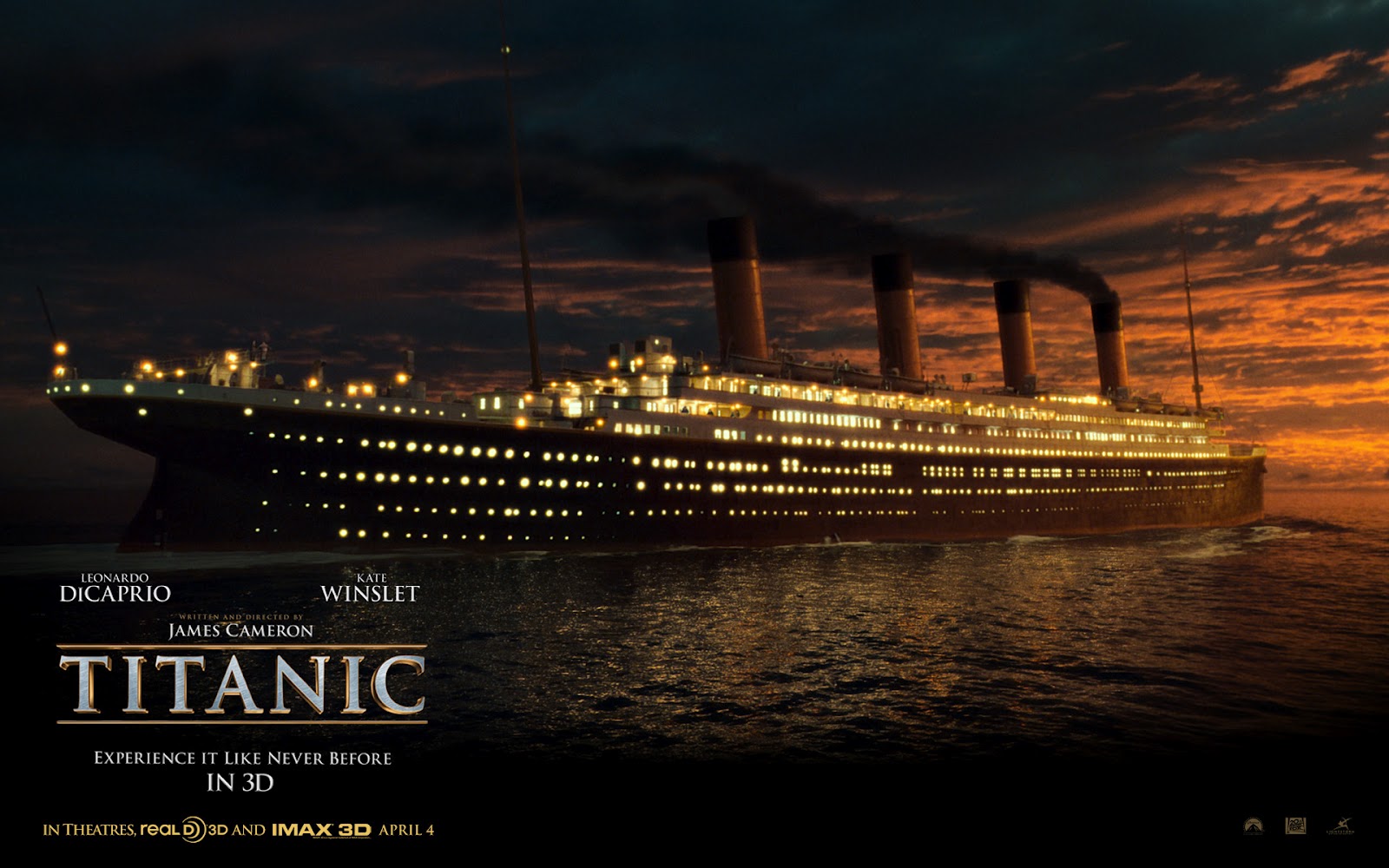
A Reel 100: Titanic and A NIGHT TO REMEMBER

“People first, things second.”


On the 100th Anniversary of the sinking of the famed ocean liner Titanic, this Blogger was pleased to attend a showing of A NIGHT TO REMEMBER (1958) on the big screen.

Based on the book of the same name by Walter Lord, NIGHT was a landmark film for its time; with breathtaking visual effects and the first film to accurately depict the sinking. The film benefitted from Titanic’s fourth officer, Joseph Boxhall, who served as a technical advisor. The film’s leading man was Kenneth More, who played second officer Charles Lightoller. Bernard Fox, who played the lookout Fredrick Fleet (the man who saw the iceberg), would also appear as Colonel Archibald Gracie IV in James Cameron’s 1997 TITANIC, making him the only cast member in two films about the sinking. As a sidenote, the film also has a young and uncredited Sean Connery…five years before his first turn as James Bond.

Where Cameron’s ’97 version was essentially a retelling of Romeo & Juliet, A NIGHT TO REMEMBER steams away from the human elements and focuses mostly on the facts known at the time. It is a docudrama, perhaps one of the most effective ones ever made. For the most part it gets the facts correct; an astounding feat considering the film was made 28 years before the revealing discovery of the wreck. With no real heart for audiences to connect to, NIGHT turns to Kenneth More’s Lightoller as the main character; a smart choice considering the dutiful, and oft-forgotten heroics Officer Lightoller played during the catastrophic events of that night.

Despite trading in heart-felt stories for 1950’s-era melodrama, NIGHT still manages to be effective. The visual effects, which may feel a tad dated today, still pack a powerful punch and it is interesting to see the many elements that Cameron would eventually borrow for his own historic film nearly 40 years later. NIGHT also makes it a point to drive home the massive differential between first and third class people; a social statement that rings true to this day. NIGHT is a look at the disaster through 1950’s eyes, but it still feels incredibly relevant; a rare accomplishment for a film from that era. And on top of it all, the black-and-white delivers a hovering eeriness that you cannot help to be aware of.

*

As a history-buff and Titanic-nerd, this Blogger/movie-geek has always had an interest in A NIGHT TO REMEMBER, but only experienced it in increments over the years on TV. On the big screen in a digital presentation, it really gets the justice it deserves. It looks and sounds incredible; a testament to the great effort of the filmmakers nearly 54 years ago. A NIGHT TO REMEMBER may not be a tearjerker, but it remains an important part of the undying legacy of Titanic and the many, many lives she has touched.

Friday, April 13, 2012

A Reel Review: THE CABIN IN THE WOODS


From creatures to ghouls to zombies, from bloody gore to found-footage to twist endings, it feels like the horror film genre has tried everything over the past one hundred years to scare us. With all these cliché methods now feeling old and tired, the genre has felt doomed. Enter writer/producer Joss Whedon and director Drew Goddard; whose CABIN IN THE WOODS doesn’t shun those old cliché’s, but embraces them with a fresh original spin that changes everything.

Five college friends; Curt (Chris Hemsworth), Dana (Kristen Connolly), Jules (Anna Hutchinson), Holden (Jesse Williams), and Marty (Fran Kranz), head to a remote cabin in the woods for a weekend getaway, only to be picked off one by one by a mysterious terror; a terror which seems to be controlled by another undefined force.

To reveal any more of the plot would be criminal, for CABIN IN THE WOODS relies a lot on its secrets. Those secrets are not revealed in a big-boffo punch-in-the-face at the end, but is slowly unfolded throughout the course of the film. During that time, CABIN takes the cliché horror-film characters of the jock, the slut, the nerd, the stoner, the virgin, and even the creepy gas-station attendant and re-defines their purpose. It doesn’t come off as a spoof or a parody at all, and instead finds a clever and original way to define the familiar pieces and parts that we have seen throughout every horror film ever made. To be clear, CABIN will force us all to look at all those old horror films in a new light; it gets at the story underneath, and the reasons why films of this genre unfold the way they do.

Filmed just over three years ago, it’s neat to see Chris Hemsworth prior to his THOR bulk, and you can see just how far he has grown as an actor. The cast is overall great, with the show being stolen by Fran Kranz (Topher from Whedon’s DOLLHOUSE), whose comedic stoner-humor keeps things light. Fans of Whedon and his prior work will likely get a thrill out of the many cameos and smaller roles by his alumni, all of which are never mishandled.

CABIN has a few good scares here and there, but it is far from the scariest or creepiest film ever made. Where it lacks in scares it makes up for in sheer entertainment; it is a thrill ride which grabs your attention early and never lets go. It’s sheer stroke of originality is almost too good in that there will likely never be any imitators or even sequels. It is a one-of-a-kind special movie that the horror-film genre has needed for a long time.

BOTTOM LINE: See it

Wednesday, April 11, 2012

Reel Facts & Opinions: THE HUNGER GAMES needs a director, and TITANIC's haul.

FACT: After weeks of back-and-forth, director Gary Ross has bowed out of taking the helm to the sequel to THE HUNGER GAMES, CATCHING FIRE. Ross, whose first installment was No. 1 at the Box Office for a third straight week (total haul: $302 million) is taking a pass on the follow-up citing an already fixed schedule that he couldn’t work with.

OPINION: As someone who was completely underwhelmed by THE HUNGER GAMES, this Blogger finds this to be a bit of good news. Ross, who has turned in some impressive films in the past in the form of SEABISCUIT and PLEASANTVILLE, just seemed unsuited to THE HUNGER GAMES film adaptation, which seemed to pander to the book-crowd and segregate itself from the outsiders. It felt like more chances needed to be taken; chances that may have angered the hordes of tweens, but pleased the average movie-goer unfamiliar with the GAMES universe. While there is no word on who will take over the next film, this Blogger submits that the producers would be well-served poaching a director from the HARRY POTTER films; Chris Columbus, Alfonso Cuaron, and Mike Newell have proven they can fare well in an alternate universe with young actors. Just keep that wanker David Yates away from it.

FACT: The (goddamn) 3D release of TITANIC did not sink, but didn’t quite make its port either. The re-release on the big screen drew in $17.3 million this past weekend (good for third place), just shy of the $18 million spent to convert the 15-year old film into the third dimension.

OPINION: To be fair, TITANIC went up against a juggernaut in the form of THE HUNGER GAMES, and an established franchise in the form of AMERICAN REUNION (which finished second). Aside from the cynical dickheads who brush off the film because they know the boat sinks, audiences seem to be drifting away from these (goddamn) 3D re-releases. With other avenues of less-expensive viewing such as DVD, cable, Netflix, and (glorious) blu-ray, smart folk are veering away from having to deal with stupid clunky glasses and overpriced tickets. While those audiences may have been cheating themselves a little (the conversion was outstanding), they can make a good argument that TITANIC is good enough to be viewed without the added dimension; despite the fact that the film still has yet to see a blu-ray release (get on that, Jim).

What say you?

Thursday, April 5, 2012

A Reel Review: TITANIC 3D


There are two types of 3D films in this age. The first type are the ones which are shot for the format in the first place (AVATAR, TRANSFORMERS 3), and generally are the most successful in not looking like shit. The second type, and less successful, are the films that are converted into 3D only after they are shot and edited (STAR WARS EPISODE I, CLASH OF THE TITANS). The 3D conversion of the now 15-year old TITANIC was a curious one, especially with the technology-wizard, director James Cameron on board.

Good 3D depends on a lot of factors, with the most important one being depth of field; which is something that all directors should be shooting for in the first place. With that said, TITANIC is by far the best post-converted 3D movie to date. The depth of field is outstanding; long hallways, deep dining rooms, and sweeping exteriors of the ship are jawdropping. And what is really impressive is that the 3D even works in intimate scenes where the actor’s faces and/or torsos take up most of the frame. There is always a sense of depth present and it looks very real. The film hits you right away in the early underwater scenes around the wreckage; the overhead look down the black chasm into the bowels of the ship is as eye-popping as it is frightening. The effectiveness of this release is a testament to the way the film was put together 15 years go. To be fair, the dimness is still a bit of a factor, and things get a little blurry when fast things are happening.

The re-mix of the soundtrack adds some mighty weight. The clarity is awesome; from the soft clicks of doorknobs to the deep groaning of the ship as she takes on water. The remastered sound, along with the new deep visuals adds a lot to the experience; the final moments of the sinking of the upended stern are enough for anyone to crap their pants.

And TITANIC on the big screen is still a worthwhile experience. The laughs and tears still work, and it’s neat to see Leo and Kate as young pups. This Blogger’s theatre seemed to be full of folk experiencing the film for the first time, and they seemed to be engulfed in every moment. TITANIC is a timeless film which doesn’t need 3D to be enjoyed, but it is well-suited for the format since it was shot correctly in the first place.

P.S. The new shot of the starfield towards the end is actually quite beautiful. But what it is curious is that the film has probably a hundred other shots containing stars which remain unaltered. Either Cameron got those stars right the first time, or Professor Honeydew is full of shit (see Reel Speak 4/3).

Tuesday, April 3, 2012

Reel Facts & Opinions: James Cameron Fixes TITANIC


FACT: The release of TITANIC in (goddamn) 3D in theatres this week will come with one subtle alteration: director James Cameron has altered the stars at the time of the sinking.

Astrophysicist Neil deGrasse Tyson realized upon his first viewing of TITANIC (15 years ago), that the starfield that Rose stares at while floating in the debris, was completely wrong. According to Tyson, the left half the sky was nothing more than a mirror image of the right side of the sky.

Tyson contacted Cameron via email (described as “snarky”), and Cameron, a noted perfectionist, obliged his science critic and corrected the shot for the new release to reflect exactly what the sky looked like in the early hours of April 15, 1912.

OPINION: The absolute worst thing James Cameron could have done (besides messing with this 3D bullshit) was to oblige this astro-nerd, who despite his long-list of PhD’s has nothing better to do with his time.

Some credit can be given to Cameron for not letting his pride get in the way, and admitting that he made an error when he just made up his own starfield during TITANIC’s production. For the sake of a film which serves as an historical piece as much as a drama, it’s worth getting the facts correct. There’s also the minor (ha) issue of people wanting to see the original, unaltered versions of their favorite movies. Just ask ten different people what versions of STAR WARS and BLADE RUNNER they prefer and you’re promised a headache.

The debate of Scientific Accuracy vs. The Movies has been explored here on Reel Speak before, but that was focused on science-fiction films (where the sky is the limit, so there). But the danger here is giving the science nerds power. Cameron’s relenting has opened the door for more astro-nerds to nitpick films for not having the stars right and eventually get their way. In the long run maybe some good will come of it. Perhaps filmmakers, out of fear of being embarrassed by guys who look and sound like Professor Honeydew, will pay more attention to their accuracy and get it right the first time.

What say you?

Friday, March 30, 2012

A Reel Review: WRATH OF THE TITANS 3D


WRATH OF THE TITANS is the sequel to CLASH OF THE TITANS (2010), which was a remake of the 1981 film of the same name. Considering the poor critical and financial performance of CLASH, it was a surprise that WRATH was given the green light. Director Jonathan Liebesman swore by the gods that he recognized the faults of CLASH, and knew how to correct them. Correct them he did (to an extent), while adding more to the mix. More of what is the real question.

Ten years after defeating the Kraken, Perseus (Sam Worthington) is attempting to raise his son while living the life of a fisherman. Meanwhile, weakened by humanity’s lack of devotion, the gods are losing control of the imprisoned Kronos, leader of the Titans and father of the gods Zeus (Liam Neeson), Hades (Ralph Fiennes), and Poseidon (Danny Huston). When Zeus is double-crossed and imprisoned, Perseus must pick up his sword and best gal Andromeda (Rosamund Pike) to rescue his father and prevent hell on Earth.

So WRATH starts off as a father-son drama set against the backdrop of Armageddon with an interesting sub-plot of humans having no use for prayer just for good measure. The storylines are good, and are established quickly, but are then unfortunately lost amidst spectacle and too many layers of useless plot. The pattern of WRATH follows CLASH to the same effect; a modern-video game adventure of our hero fighting his way to level after level, having to defeat some sort of creature before moving on. Also adding to the lack of focus is a poorly developed weave of plot-threads of having to merge broken spears to save the day. Our hero, Perseus, gets lost amidst the spectacle and it’s tough to remember him even being in the movie. With no hero, there is no connection.

From a technical standpoint, WRATH is a bit of a marvel. The CG creatures are excellent and fight and move and drool with great fun. Director Jonathan Leibesman pulls off some excellent tracking shots, and the sound-mix is outstanding. Leibesman unfortunately often falls for the crazy-ass shaky-cam one too many times, and it’s easy to lose track of what is where or even why.

The (goddamn) 3D is really excellent in some places. Similar to AVATAR, it uses the added dimension to enforce the feeling of great depth and geography, and breaths some serious life into the surroundings. It of course can’t help itself to get gimmicky now and then (be prepared to duck), and often feels like it vanishes in any intimate scenes. As with any other third-dimension film, the entire experience does have a dull color to it; which is a shame as the CG creatures and environments look like they would be full of vibrancy.

Sam Worthington seems to be improving with each film. Here he manages to hold on to his accent well enough, and the physical work he has to endure is impressive. He still feels miscast (or maybe misused) as Perseus, as he never really gets to show any heart or emotion. Again, no connection. Rosamund Pike is completely miscast as Andromeda; being neither beautiful or dangerous, and looking ridiculous when raising a sword and yelling. Liam Neeson and Ralph Fiennes both seem to love playing gods, and they get to flex some god-like muscle and have some fun. The show is probably stolen by Bill Nighy’s Hephaestus character, which is great comic relief with some help from his little mechanical friend.

Whatever sort of message or lesson WRATH is trying to sell us gets completely lost by the time the (anti) climatic battle rolls around; whether it be Perseus’ destiny, fathers and sons, or man’s disrespect to the deities…none of it feels resolved or important by the time the credits roll. The title of the film also seems to be a gyp as only one goddamn Titan bothers to show up. WRATH OF THE TITANS has some fun moments and looks great, but beyond that there is nothing for anyone to get up in a wrath about.

BOTTOM LINE: Rent it

Thursday, March 29, 2012

Reel Facts & Opinions: The Invasion of THE AVENGERS

FACT: Joss Whedon’s long-awaited, big-nuts superhero team-up film THE AVENGERS has been chosen to close the 2012 Tribeca Film Festival on April 28th.


The Tribeca Film Festival was founded in 2002 and traditionally has a lineup of independent films, documentaries, narrative features and shorts, and a program of family-friendly films. Its main goal has been to bring independent filmmaking to a wide audience.

Last year’s festival was closed out by Edward Burns’ THE NEWLYWEDS, an independently produced film with a budget of $9,000. By comparison, THE AVENGERS is being produced by Marvel Studios with a budget of $220 million, and has a top-heavy cast in the form of Robert Downey Jr., Sam Jackson, Chris Evans, Mark Ruffalo, Scarlett Johansson, Jeremy Renner, and Chris Hemsworth.

OPINION: Clearly, Marvel is looking to get out of the gate in a flash by invading the quaint confines of Tribeca. With the festival closing on April 28th and THE AVENGERS’ official release date May 4th, they are looking to generate early positive buzz which will hopefully bring in more asses to the theatres.

With movie attendance down every year, we can’t blame Marvel too much for looking to get out early. That, and with this year being the ultimate war between comic-book movies (DC Comics’ THE DARK KNIGHT RISES opens after THE AVENGERS), a few days really does mean a lot. And it’s probably good for Tribeca; they likely will be seeing a huge spike in attendance this year.

But at what expense?

With Tribeca being a quaint showcase with friendly competition, this very much feels like Barry Bonds hitting home runs in a little league park. The tiny films with their micro-budgets will be swallowed alive and whole by Iron Man and his millions. If this plan works out for all parties, then we can likely expect Tribeca to be invaded by big studios every year. That sort of end-game goes against everything the festival has stood for. As someone who has had some moderate success in indie-film, this Blogger would prefer Bonds to sit this one out.


What say you?

Wednesday, March 28, 2012

Reel Facts & Opinions: End of an Era for Disney

FACT: In what may be one of the final nails in the coffin of the traditional 2D animated film genre, Mr. Glen Keane has announced that he is leaving Walt Disney Animation Studios after 38 years. Keane had worked on THE LITTLE MERMAID (1989), BEAUTY AND THE BEAST (1991), and ALADDIN (1992).


Keane, who is son of the late cartoonist Bil Keane (THE FAMILY CIRCUS), was largely responsible for the creation of Ariel, the Beast, and Aladdin characters, and the title characters in POCAHONTAS (1995) and TARZAN (1999). He also worked on THE RESCUERS (1977), PETE’S DRAGON (1977) , and THE FOX AND THE HOUND (1981). His last credit with Disney was TANGLED (2010), and is departing to pursue other interests.

OPINION: Here’s some Reel Speak trivia: THE RESCUERS was the first film this Blogger ever saw on the big screen, via a drive-in (remember those?), so it’s sad to know that the man responsible for that classic charmer of a film will no longer be bringing his touch to Disney productions.

Ever since the rising of Pixar as the undisputed king of animated films, the traditional 2D animated genre has become an endangered species. Computer-generated films are now widely accepted as the only way to go for an animated movie. Most kids may be entertained by an old 2D film for a short spell, only to raise their own bar once they see the eye-popping textures generated in TOY STORY 3 or RANGO.

Whether or not Pixar started out with the intention of obliterating decades of Disney’s animated-film history with the click of a mouse (pardon the pun) is debatable. This Blogger believes that Pixar intended not to radically change animated movies forever, but to offer new tools to make the process work better, and tools are only as good as the persons who are using them. Some of those old 2D animators made the conversion over to the digital age, some did not. It would be a sad thing to think that Glen Keane fell into the unfortunate position of the latter, for Disney hasn’t been able to figure out what to do with its old animators for the past twenty years. Maybe Keane made the decision for them.

Keane’s departure may very well mark the end of a long and magical era for Disney and the movies as a whole. It’s ironic that this would happen in this year, the 75th anniversary of SNOW WHITE AND THE SEVEN DWARFS; arguably the film that really started it all. Out with the old and in with the new, as they say…but it will be exciting to see what Glen Keane manages to create for us next.


What say you?

Friday, March 23, 2012

A Reel Review: THE HUNGER GAMES


Adapting a wildly popular novel for the big screen can be a tricky business; make too many alterations and deviations from the source material, and you’ve got a riot on your hands from the fans. Make too little changes, and you run the risk of alienating or confusing the broader audience who are unfamiliar with the book. It’s hard to tell which approach director Gary Ross took in his adaptation of THE HUNGER GAMES, but either way it’s a film that comes across as a mixed bag of light social commentary sprinkled with teen romance.

In the ruins of what was once North America, the nation of Panem forces each of its twelve districts to send a teenage (or younger) boy and girl to compete in the Hunger Games; a twisted (and televised) punishment for a past uprising in which the teens must battle each other to the death. Katniss (Jennifer Lawrence) volunteers for the games in place of her chosen sister, and must compete against her friend (and love interest) Peeta (Josh Hutcherson).

The concept of a society keeping order by having children fight each other to a bloody death is an extreme one, and tough to wrap your head around. Seemingly aware of this, Ross spends the entire first hour of the film exploring and developing the world that THE HUNGER GAMES exists in. A LOT of time is spent preparing for the games, and despite so much time being spent, it doesn’t feel like a whole lot is explained. Yes, we know that the games exist as some sort of punishment, but to what end? Not much time is spent fleshing out the concept behind kids killing each other, and without a connection to that it’s difficult to buy into the film as a whole. The first act drags on and on without answering the important questions and borders upon boring, and if you don’t capture your audience in the first act (or the first 15 minutes for that matter), you never will.

Once the games finally (and mercifully) begin, things pick up a little bit, but not enough. Despite alliances and friendships being formed and broken, there just isn’t much reason to care whether or not these damned brats live or die. The entire run feels glossed over; a film that is all about children dying ought to draw out a lot more emotion (and this draws none). To inject some heart, Ross forces a romance between Katniss and Peeta, which comes off as cheesy and eyeball-rolling. Ross also uses way too much shaky-cam here, which adds nothing to the mix.

The acting isn’t anything to write home about. It’s unclear whether or not Jennifer Lawrence was directed to play so uptight and wooden, but her acting here is as likeable as a plank. Woody Harrelson’s role as a comedic drunk is completely underutilized, and a wasted character in Toby Jones might as well have been a mute. Stanley Tucci hams it up as the play-by-play announcer, while Donald Sutherland manages to offer some grace and legitimacy to things. The most difficult task seemed to belong to Elizabeth Banks, who had to (decently) act her way beyond the (intentionally) ridiculous-looking pixie-doll costume and makeup she had to wear; looking very much like Johnny Depp in a Tim Burton film.

Fans of the book will likely enjoy seeing their beloved world and characters come to life on the big screen, and for them this is likely a treat. This Blogger’s theatre-audience seemed to be split down the middle; half of them were full of oooh’s and aaah’s, while the other half sat quietly trying to figure out what they were missing. Either way, a movie must be judged upon its own merits, and while THE HUNGER GAMES offers a few interesting ideas, there is overall not much to give a rat’s ass about.

BOTTOM LINE: Rent it

Wednesday, March 21, 2012

A Reel 40

“I believe in America…”


This week marks the 40th anniversary of THE GODFATHER

In the late 1960’s, the movie industry was dying. Most of the major motion picture studios, including Paramount Pictures, were desperate for a big hit; a hit that would save their own assess while re-installing confidence in the American movie-going public.

Part of the problem in Hollywood those days dealt with a stale environment for filmmakers. Frustrated by such a stifling creative atmosphere, a group of experimental filmmakers which included Francis Ford Coppola and his friend George Lucas, founded their own independent studio which would inspire creative and unconventional approaches to filmmaking.

Approached by Paramount to direct an adaptation of Mario Puzo’s novel, Coppola initially turned down the offer. With THE GODFATHER being a violent story of mafia crime bosses, Coppola, an Italian-American himself, did not want to paint his heritage in a negative light. However, Coppola was convinced by Lucas to take the plunge. Desperate for a money-making hit, Paramount put immense pressure on Coppola during casting and filming, and the director was nearly fired many times. However, Coppola eventually won out on many important decisions; including the casting of Marlon Brando and setting the film in the correct time period, 1945 to 1955.

With a now historic ensemble cast which included Brando, Al Pacino, James Caan, Robert Duvall, Diane Keaton, Talia Shire, and Abe Vigoda, THE GODFATHER was a hit and eventually became a milestone in movie history. It was nominated for eleven Oscars, winning three, including Best Picture. It was selected for preservation in the United States Film Registry in 1990, and is regarded as the second greatest film in American cinematic history; second only to CITIZEN KANE. THE GODFATHER brought greatness back into film, virtually saving the industry and serving as the model for all future crime dramas; GOODFELLAS, THE DEPARTED, and the TV series THE SOPRANOS can all trace their roots back to THE GODFATHER.

*

Having grown up in a whimsical movie world with thrilling adventures in the forms of STAR WARS and Indiana Jones, this Blogger did not catch up with THE GODFATHER until much later; the film always seemed too dark, too grown-up, and nearly too scary. It wasn’t until college and that Film 101 class where this Blogger was introduced to the film, which then began a new appreciation for movies and provided a method of film and story de-construction. More than a crime drama, THE GODFATHER presents strong themes of loyalty and family in ways that thousands of films have tried and failed to match. It is timeless and important, and always makes us believe in the movies.